
You asked three factories for compliance documents. Two sent the same one-page PDF, and the model on it isn't the one you're buying. That's where "certified" stops carrying information. A claim is only as useful as the paperwork behind it — and a certified earbuds manufacturer isn't a factory holding a certificate, but one that can say which document covers which product, in which market, on which date.
This is the buyer's-side check: what FCC and CE each prove, six fields to verify, and our own G129 file — including what it doesn't prove.
What does a certified earbuds manufacturer actually mean?
There's no such licence. Neither US nor EU law grants a factory a status called "certified manufacturer"; what exists is a stack of product-specific authorisations, declarations and test reports. Most suppliers aren't lying — they compress that stack into one adjective that fits an email signature. The compression is where buyers get hurt.
Compliance follows the product, not the company: a new chipset or housing can change which documents apply, and the FCC notes that modifications may require an additional approval. Ask for the document for this model and market, and who signed it.
FCC vs. CE: what do these documents actually prove?
In the US, RF devices must be authorised under 47 CFR part 2 before marketing or import. The FCC describes Certification, where a Telecommunication Certification Body (TCB) issues a grant, and Supplier's Declaration of Conformity (SDoC), where the responsible party warrants compliance and keeps the records. An FCC ID is a lookup key for a grant in the FCC's equipment authorisation database — not a quality badge and not a global approval.
For the EU, Directive 2014/53/EU (RED) sets essential requirements for safety and health, electromagnetic compatibility, and efficient use of the radio spectrum. Bluetooth headsets are radio equipment. CE marking isn't a certificate an authority hands to a factory: the European Commission puts the burden on the manufacturer to run the conformity assessment, assemble technical documentation, issue the EU declaration of conformity and affix the mark. A notified body is involved in defined cases; its number can be checked in NANDO.
Put simply: FCC is a product authorisation recorded in a US database; CE is the manufacturer's own declaration backed by technical documentation. Neither is a factory-wide certificate. Keep one distinction straight — a test report, a verification document and an EU declaration of conformity are three different kinds of paper, and calling all three a "CE certificate" is the quickest way to misread what you've been sent.
6 things to check on earbuds certification documents
Field | What to ask |
|---|---|
Manufacturer | Who is named as manufacturer or applicant? |
Product model | Is the model identical to the sample and the quote? |
FCC ID / report number | Is there a traceable identifier? |
Issuing or testing organisation | Which lab tested it, which body issued the grant? |
Applicable standard | Which rule part, directive or standard was applied? |
Document date and scope | When was it issued, and what does it cover? |
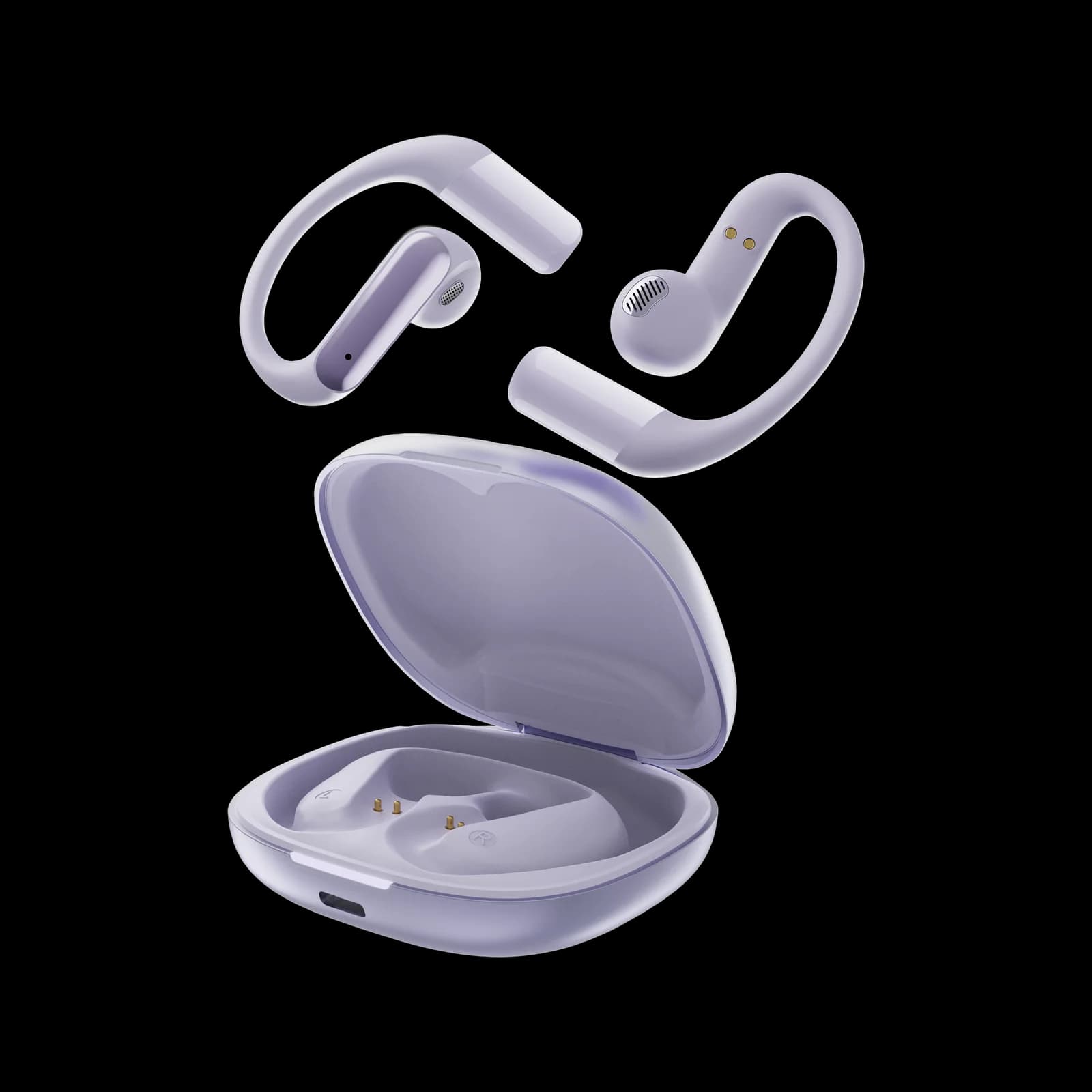
Model mismatch is the one worth losing sleep over. G129's FCC paperwork can't show that a different clip-on model is authorised, however alike they look. Check the identifier against the sample, quotation and packaging artwork — and remember a report for an earlier revision describes that revision.
Real example: the G129 documentation set
Our own model, as a worked example rather than a sales pitch: four pieces of paper, none of which is a certificate.
Document | What it actually is | Reference | Date |
|---|---|---|---|
FCC Equipment Authorization | The grant record for this model, published as a PDF on our site | FCC ID `2BPU9-G129` | Granted 8 June 2025 |
FCC radio test report | The 67-page report behind the grant: FCC Part 15.247 and ANSI C63.10:2013, Bluetooth Classic radio, all items PASS | `BCTC2505408499E` | Issued 28 May 2025 |
CE / RED verification reference | A verification document referenced on our manufacturing page — not an EU DoC | `BCTC2505312490C` | 2 July 2025 |
EU Declaration of Conformity | Manufacturer-signed declaration for one model and one configuration | Not in the public set | Issued per project |
Start with the FCC authorization, because you can check it without taking our word for anything: the FCC ID resolves in the FCC database, and the grant names the applicant, the model and the date. On the CE side we publish a verification reference rather than a declaration — a DoC is drawn up for one model and one configuration, and ours travels with the project. That reference is still instructive: it sets out the four RED requirements, safety, health, EMC and radio, each against its own report number, which is the shape a real EU file takes.
The report also sets its own limits. Its results refer only to the samples tested, with sample information supplied by the client, and its own remark says it is a Bluetooth Classic radio test report. A radio test report is not EMC evidence, not a safety file and not a declaration. Shenzhen BCTC Testing Co., Ltd. is the testing laboratory named in it — not an EU notified body, and no notified body number appears; the ISO/IEC 17025 statement on its closing page describes the lab's own quality system, not an authorisation to certify CE compliance.
Inspect what we publish at the compliance section of our manufacturing page and the G129 product page: the FCC authorization document. Our page states these apply specifically to G129, with other products and markets confirmed per project. We won't claim the whole catalogue is covered — if you're buying a different model, ask for that model's file.
3 certification claims earbuds buyers should question
What the supplier says | What to ask next |
|---|---|
"Our factory is FCC certified." | Which product model, and what is the FCC ID? |
"All our earbuds are CE certified." | Can you provide the DoC and model-specific supporting documents? |
"We have passed all international certifications." | Which regulations, markets, models and test reports? |
None is automatically false; each is incomplete until tied to a model, a number and a scope. A certification claim is only as useful as the documentation behind it — verify the model, document number, issuing organisation and regulatory scope before treating it as evidence.
How to verify an FCC ID and request CE documentation
For a US-bound product, search the FCC ID in the FCC's equipment authorisation database. It splits into a grantee code and a product code; read the applicant, model, grant date and exhibits, then compare them with the sample in front of you. A grant confirms what was filed, not that every unit in your shipment matches that filing — the FCC's guidance on modifications is why you keep checking.
For the EU, ask for the declaration of conformity first. It should identify the manufacturer, the product, the applicable legislation and standards, and carry a legally binding signature; where a notified body was involved, its number should appear and can be checked in NANDO. Then ask for the technical documentation and test reports behind it, with numbers and dates. A single scanned "certificate" with no model number is a marketing asset.
We don't publish a blanket DoC for every model; it's issued per project. Asking for it is the correct move.
What certification requirements should you include in an earbuds RFQ?
Put this into the RFQ rather than raising it after the sample arrives:
Certification documentation requirements for earbuds suppliers
Please provide, for each proposed earbud model:
The FCC ID and applicable equipment authorisation records for the US market.
The EU declaration of conformity covering applicable EU legislation, including RED where relevant.
Supporting RF, EMC, safety and other test reports, with report numbers and dates.
Product model numbers matching the samples and the commercial quotation.
Document numbers, testing laboratory or issuing organisation, and document dates.
Written confirmation of the markets and configurations the documentation covers.
Please identify any document that is pending, unavailable, or applicable only to specific models.
Our RFQ checklist covers the rest of a quotation, the OEM and ODM page shows how a project moves to production, and the contact form is where the request lands.
Frequently asked questions
What certifications should wireless earbuds have?
It depends on where you sell and what the product does. A Bluetooth headset is an RF device in the US and radio equipment in the EU, so FCC authorisation and RED conformity both apply; battery safety and chemical restrictions are separate. Ask which regulations cover your markets, not for "all certificates".
Is FCC certification required for earbuds sold in the US?
RF devices must be authorised under 47 CFR part 2 before marketing or import. Whether Certification through a TCB or SDoC applies depends on the equipment and rule part. A lab report alone doesn't complete the process, and an FCC ID doesn't cover a revised design.
Is CE marking mandatory for wireless earbuds in Europe?
Radio equipment falls under RED, and the manufacturer must handle the conformity assessment, technical documentation, declaration of conformity and CE marking before trading. CE marking isn't bought from a certification body. If a "CE certificate" is offered as the whole answer, ask where the DoC is.
How can I verify an FCC ID?
Search it in the FCC's equipment authorisation database and read the grant record and exhibits. Check the applicant, model, grant date and scope against the unit you're buying. An ID that returns nothing, or a different product, is worth asking about before the deposit.
Does one CE document cover every earbud model?
No. A DoC is drawn up for a product under identified legislation, and its technical documentation is model-specific. Similar-looking earbuds can have different radios, batteries or housings. Treat each model and configuration as its own file.
What is the difference between a CE certificate and an EU declaration of conformity?
The DoC is the manufacturer's signed statement, backed by technical documentation. A "CE certificate" is usually a test report, a verification document, or a notified body document where one was involved. They have different authors and legal weight; ask for both the declaration and the evidence.
Sources
FCC — Equipment Authorization: 47 CFR part 2, Certification and SDoC, TCB grants, FCC ID search, product modifications.
European Commission — Radio Equipment Directive: Directive 2014/53/EU and its essential requirements.
European Commission — Manufacturers and CE marking: conformity assessment, technical documentation, the DoC, notified bodies, NANDO.
Nevoks — Manufacturing and certifications: public G129 references and their model-specific scope.
G129 laboratory report reviewed: FCC radio test report `BCTC2505408499E` (67 pages, 28 May 2025), Shenzhen BCTC Testing Co., Ltd.
Editorial publication note: Regulatory descriptions come from FCC and European Commission pages opened on 14 November 2026 and are summaries, not legal advice. Every number, date, standard, page count and quoted limitation in the G129 section was read from that FCC report or from our own manufacturing page; the CE/RED reference is quoted as listed there and its contents are not described. Each item is described by its actual document type: none is called a CE certificate, no EU DoC is claimed as part of the public set, and nothing states that other models share G129's authorisations. We ran no compliance test for this article and make no claim about a buyer's obligations, which are confirmed per project.