
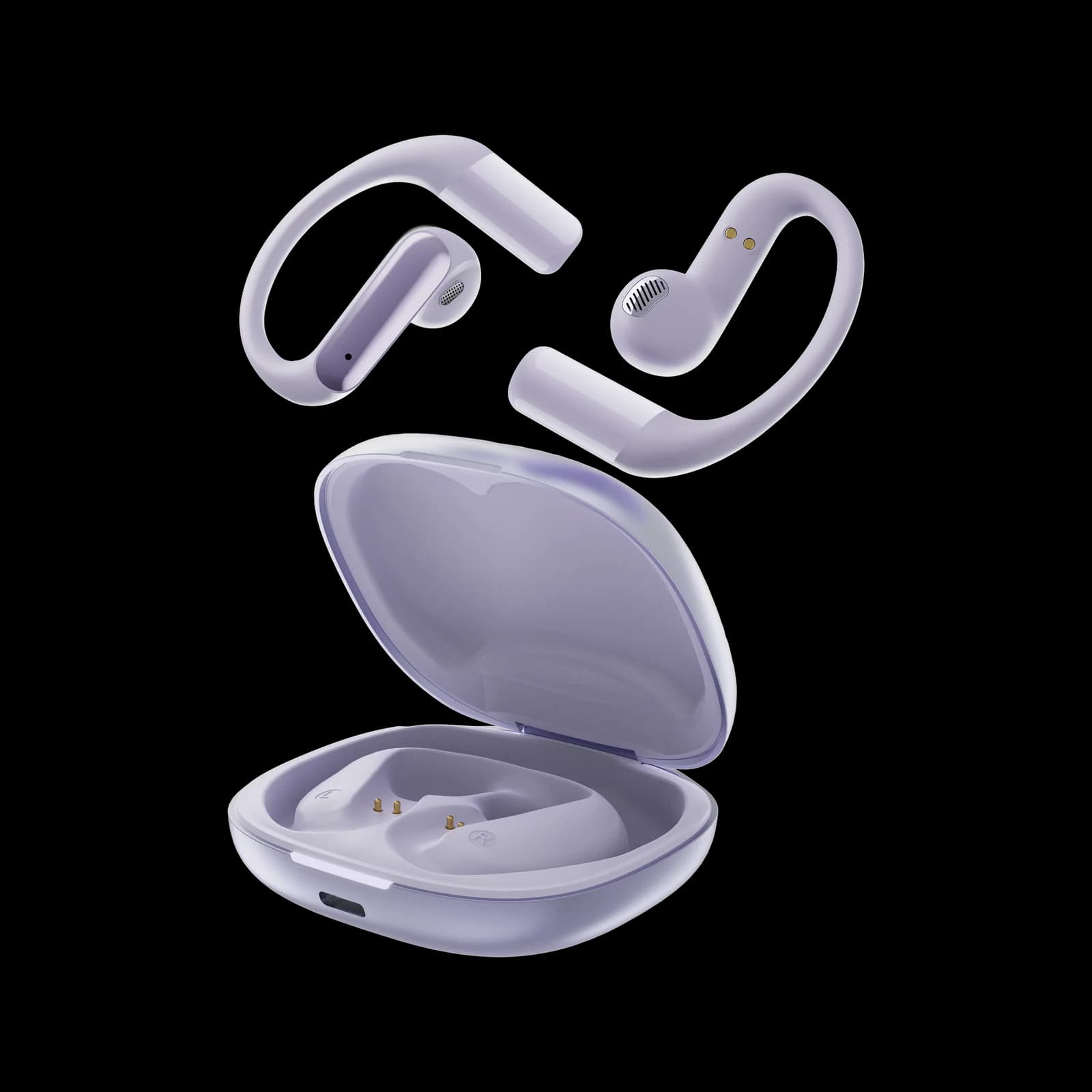
The best earbuds for the gym are the ones that stay comfortable and secure through the workout you actually do. A pair that works during a slow walk may loosen during sprints, while a model that feels stable during weight training may become uncomfortable during a long run.
Fit is only one part of the decision. Sweat resistance, controls, sound quality, battery life and awareness of your surroundings all matter. Before choosing a pair, think about your main activity rather than buying on the basis of a single “sports” label.
Why workout earbuds can become uncomfortable or loose
Movement changes how earbuds sit. Running creates repeated impact; strength training can involve head movement and contact with towels or clothing; sweat can make some surfaces slippery. If the ear tip or stabilizing fin does not match your ear, you may find yourself adjusting the earbuds between sets.
A poor fit can also affect sound. In-ear earbuds rely on a consistent seal, so a loose tip may reduce bass and change the perceived volume. Turning the volume up to compensate is not a reliable solution. It is better to correct the fit or choose a different style.
Which earbud design suits your workout?
In-ear earbuds with silicone tips
Traditional in-ear earbuds can provide a secure seal and help isolate outside noise. They are often a good match for listeners who prioritize bass or want to reduce gym background noise. Look for several tip sizes and, if needed, optional wings that help stabilize the housing.
The trade-off is that the seal can feel uncomfortable for some users, and awareness of surrounding sounds may be reduced. Clean the tips regularly, especially after sweaty sessions.
Ear-hook earbuds
Ear-hook designs use a loop or flexible support around the outer ear. They can provide additional stability during running, jumping and other high-movement workouts. Check whether the hook is adjustable and whether it remains comfortable with glasses or other gear.
A secure hook does not guarantee a perfect fit for every ear shape. Try the product during the type of movement you plan to do, where possible.
Open-ear and clip-on earbuds
Open-ear earbuds keep the ear canal unsealed, allowing more environmental sound to reach the listener. Clip-on models attach to the outer ear, while other open-ear designs may use a hook or rest near the ear canal.
These designs can be useful for outdoor workouts or gym sessions where hearing nearby people matters. They generally provide less isolation than sealed in-ear models, and bass response can differ. In a loud gym, the surrounding noise may compete with the audio, so do not assume an open-ear pair will be loud enough for every setting.
For a concrete reference point, our W12 clip-on model weighs roughly 55 g for the complete kit including the charging case. In our own session test (November 2026): a 60-minute strength workout with no clip movement and no between-set adjustments, followed by a 30-minute treadmill run — console speed 7, 4% incline — again with no shift, and the buds went back in the case wiped dry. One session type, one ear shape; but "zero adjustments across 90 minutes of mixed training" is a verifiable observation, not a marketing adjective. Record the same kind of notes for any model you are considering, ideally in the session type you actually train.
Sweat resistance: understand the IP rating
A product described as “sweatproof” should have a clearly stated water-resistance rating. The IP code indicates protection under specified test conditions; it is not a blanket guarantee against every kind of moisture exposure.
For example, an IPX4 rating indicates resistance to splashing water under the applicable test. It does not mean the earbuds are waterproof or suitable for swimming. Check the manufacturer's care instructions, and remember that charging cases may have a different or no water-resistance rating.
As a worked example from our range: the W12 clip-on is rated IPX5, which is tested against low-pressure water jets — one step above splash-resistant IPX4 and a reasonable match for heavy sweat. It is still not a swimming or showering rating, and the charging case's rating should be checked separately regardless of model; the safest habit with any IPX-rated earbud is wiping it dry before it goes back in the case.
After a workout, wipe the earbuds with a suitable soft, dry cloth and let them dry before placing them in the charging case. Follow the manufacturer's cleaning guidance rather than rinsing a product that is not rated for that use.
In-ear vs. open-ear vs. ear-hook: a practical comparison
Feature | In-ear | Ear-hook | Open-ear / clip-on |
|---|---|---|---|
Fit approach | Tip sits in the canal | Hook supports the earbud | Rests near or attaches to outer ear |
Isolation | Usually strongest | Depends on whether sealed | Usually limited |
Bass | Often fuller with a good seal | Varies by model | Often lighter than sealed in-ear |
Stability | Depends on tip and ear shape | Added support for movement | Depends on clip or hook design |
Awareness of surroundings | Reduced by seal | Depends on design | More environmental sound passes through |
Best fit for | Listeners who want isolation | Running and high-movement sessions | Workouts where awareness matters |
No category wins in every situation. A runner on a busy road may value awareness, while someone training in a noisy gym may prefer the isolation of a well-fitted in-ear model. Follow local safety rules when exercising outdoors and keep audio at a level that allows you to respond to your surroundings.
Gym earbud features worth checking
Secure fit for your activity
Look for ear-tip options, wings or hooks that match your workout. If possible, test the earbuds during the movements that usually dislodge your current pair.
Physical or easy-to-reach controls
Sweaty hands, towels and clothing can make touch controls awkward. Check whether you can adjust volume, pause playback and answer calls without repeatedly touching a sensitive surface.
Battery life that matches your routine
Compare playback time per charge rather than the combined battery figure that includes the charging case. If you use active noise cancellation, transparency mode or frequent calls, check whether the manufacturer's battery estimate includes those features. If you train in two sessions a day, three to four days a week, a per-charge figure of 4.5–6 hours — like the W12's manufacturer rating — means one mid-week case charge; our own continuous music test at 50% volume ran about five hours before shutdown, inside the rated window. If you also take calls between sets, use the talk-time figure instead, which is usually lower. The distinction between per-charge playback and total battery claims is where most buyer disappointment starts.
A charging case that fits your routine
A compact case is convenient in a gym bag, but the case itself may not share the earbuds' water-resistance rating. Avoid storing wet earbuds in a closed case.
Frequently asked questions
What are the best earbuds for working out at the gym?
Choose based on your activity. In-ear models suit people who want isolation and stronger bass; ear-hook designs add support for movement; open-ear earbuds can help you hear more of the environment. Fit, comfort and verified sweat resistance matter more than a generic sports label.
How do I stop earbuds from falling out during a workout?
Try different tip sizes, check the insertion angle and consider wings or ear hooks. If in-ear models repeatedly loosen, compare a different housing shape or an open-ear design. No style is guaranteed to stay secure for every person.
Are open-ear earbuds loud enough for the gym?
It depends on the gym's noise level, the earbuds' output and your listening preferences. Open-ear models provide less isolation, so loud background music or equipment may make listening difficult. Avoid raising the volume excessively to overcome noise.
What IP rating should gym earbuds have?
Check the manufacturer's stated IP rating and what it covers. IPX4 is tested for splashing water, but it does not make a product waterproof or suitable for swimming. Also check whether the charging case has a separate rating.
Are noise-cancelling earbuds good for workouts?
They can make music easier to hear in noisy indoor environments, but noise cancellation may reduce awareness of other people and equipment. Use awareness or transparency features where appropriate and follow gym or outdoor safety rules.
Editorial publication note: W12 IPX5 rating, playback per charge and kit weight are manufacturer-rated specifications; the fit observation (60-min strength + 30-min treadmill at console speed 7 / 4% incline, zero adjustments) and the 50%-volume music test (~5 h) are documented first-hand results recorded on November 6, 2026. Do not claim that any earbud "cannot fall out."