
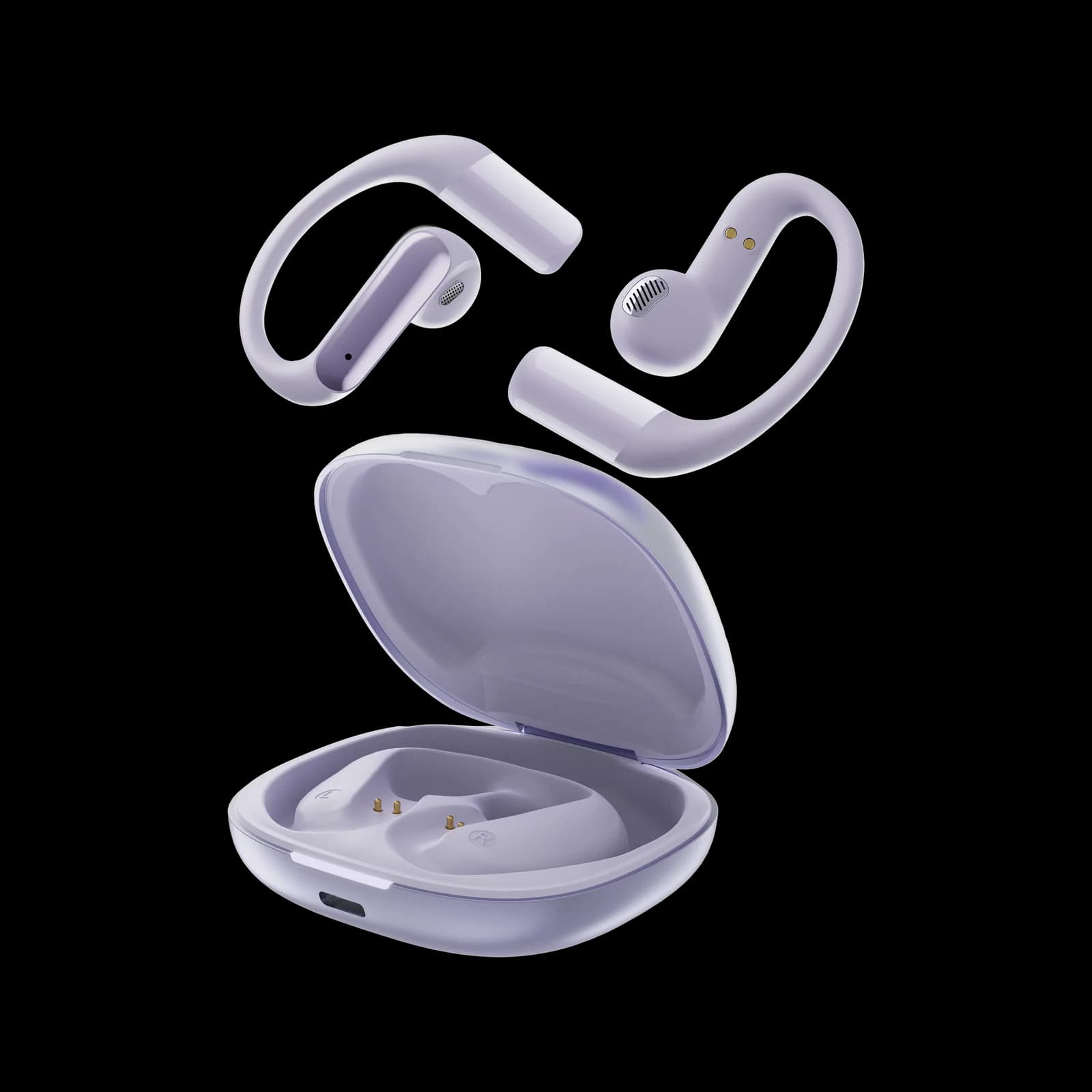
Finding earbuds that are comfortable in bed can be harder than choosing a pair for commuting or working out. A design that feels fine while sitting upright may become irritating as soon as your head rests against a pillow. For side sleepers, the shape of the earbud matters just as much as sound quality.
There is no single style that works for everyone. Low-profile sleep earbuds, soft headband headphones and open-ear designs solve different problems. The right choice depends on how you sleep, what you listen to and whether you need to hear anything happening around you.
Why side sleeping changes the fit
When you lie on your side, the pillow presses against the outer ear. A conventional true wireless earbud can create an additional pressure point because part of its housing sits outside the ear canal. Even a model that feels lightweight during the day may become uncomfortable after several minutes of contact with a pillow.
Three parts of the design are worth checking:
Housing depth: A large body that protrudes from the ear is more likely to meet the pillow.
Ear-tip fit: A tip that is too large can create pressure inside the canal; one that is too small may not stay in place.
Edges and contact points: Hard seams or rigid surfaces can become noticeable when your ear is pressed against bedding.
This is why searching for small earbuds alone may not solve the problem. A compact earbud can still have a shape that presses against the pillow. Most sleep-discomfort complaints are fit problems that have nothing to do with tip size — our guide to earbuds for small ears covers how housing shape and nozzle angle affect pressure differently.
Which type of sleep earbuds should you consider?
Low-profile in-ear sleep earbuds
Some earbuds are designed with a shallow profile and a smaller housing than everyday wireless earbuds. They can be a practical option if you want a more contained sound and do not mind wearing an ear tip.
Check the dimensions and return policy rather than relying on phrases such as “ultra comfortable.” A product photo viewed from the front rarely shows how far the housing extends from the ear.
Soft headband headphones
A sleep headband places thin speakers inside a fabric band that sits over the ears. This avoids placing a hard earbud body between the ear and pillow. It can suit people who find conventional in-ear products uncomfortable, although the band may feel warm or shift during the night.
Headbands are also less convenient if you want the compact charging case and everyday portability of Bluetooth earbuds.
Open-ear and clip-on earbuds
Open-ear earbuds keep the speaker near the ear canal without sealing it. Clip-on models attach around part of the outer ear rather than sitting inside the canal. That can remove the feeling of an inserted ear tip, which some users prefer.
However, "open ear" does not automatically mean "comfortable for side sleeping." The clip or ear hook still occupies space around the outer ear and may press against a pillow. Check the side profile and the shape of the contact area before treating an open-ear model as a sleep-specific option.
One example from our own range: the W12 clip-on earbuds attach around the rim of the outer ear rather than inside the canal, and the complete kit — both earbuds plus the charging case — weighs about 55 g. That kind of specification is worth comparing across any model you consider, because side-sleeping comfort depends far more on contact points than on sound quality.
In our own overnight wear check (November 2026, one tester), the W12 clip stayed in place through roughly ten position changes before it shifted enough to notice, and a full night of wear on the side produced no soreness or pressure points. That is one tester, one pillow and one ear shape — not a guarantee for yours — but it is the kind of observation a product photo will never give you, and it is exactly why the return policy below matters.
Five features to check before buying
1. A genuinely low-pressure shape
Look for a slim housing, rounded edges and as few hard contact points as possible. If the manufacturer provides measurements, compare the product's depth as well as its overall weight. A lightweight design can still feel bulky if it protrudes from the ear.
2. A fit that stays comfortable over time
If the earbuds include interchangeable tips, make sure the package offers sizes that suit your ears. Do not force a tip that feels tight just to create a stronger seal. If you experience pain or persistent irritation, stop using that fit.
3. Playback time per charge
For overnight listening, the relevant figure is the earbuds' own playback time—not the combined number advertised with the charging case. Check the manufacturer's test conditions, including volume and whether features such as active noise cancellation are enabled. A sleep timer can also be useful if you only need audio while falling asleep.
A concrete example: our W12 clip-on model is rated for 4.5–6 hours of playback per charge and roughly 4 hours of talk time. That is enough for falling asleep, but if you leave audio running all night, a timer or auto-shutoff is what keeps the buds from dying mid-morning. If those numbers look lower than a listing you saw elsewhere, it is usually because the other figure includes case recharges — our guide to what earbud battery-life claims actually measure breaks down how the two numbers differ.
4. Controls that are difficult to trigger accidentally
Touch controls can be activated by contact with hair, bedding or a hand adjusting the earbud. Physical buttons or controls that are less exposed may reduce accidental taps. Check whether the controls can be disabled in the companion app.
5. The level of outside sound you need
Sealed in-ear earbuds and noise-cancelling models can reduce awareness of your surroundings. Open-ear designs allow more environmental sound through, but they do not guarantee that you will hear every alarm or important sound. Do not rely on earbuds as a safety system while sleeping.
Are sleep earbuds safe to wear all night?
Comfort and listening habits both matter. Keep the volume at a modest level, avoid trying to overpower loud background noise and take a break if your ears feel sore, itchy or irritated. Sharing earbuds, keeping ear tips clean and allowing the ears time without in-ear devices can also help with basic hygiene.
People with recurring ear pain, drainage, hearing changes or other ear concerns should seek advice from a qualified healthcare professional rather than trying to solve the issue by changing earbud styles alone.
A practical buying checklist for side sleepers
Before ordering, check these details on the product page:
Side-profile photos that show how far the earbuds protrude.
Ear-tip sizes or the dimensions of the clip and contact area.
Bud-only playback time and the conditions used for the battery estimate.
Whether a sleep timer or automatic shutoff is available.
Whether controls can be locked or disabled.
A clear return policy, since pillow comfort is difficult to judge from product photos.
Frequently asked questions
What are the most comfortable earbuds for side sleepers?
It depends on your ear shape and sleeping position. Low-profile in-ear models may work for people who prefer a seal, while a soft headband avoids putting a hard earbud body against the ear. Clip-on open-ear earbuds are another option, but their outer-ear contact points may still press against a pillow.
Do earbuds fall out while sleeping?
They can. Movement, pillow contact and an unsuitable tip size may loosen an earbud. A secure fit while standing does not guarantee that it will stay in place overnight, so test the fit while lying on both sides before relying on it.
Are open-ear earbuds good for sleeping?
They may suit listeners who dislike having an ear tip inside the canal. However, open-ear designs are not automatically designed for pillow contact. Check the clip or hook shape and whether it remains comfortable when your head is turned.
How many hours of battery life do sleep earbuds need?
Start with the length of time you actually plan to listen. Compare the earbuds' playback time per charge, not the total that includes case recharges. Battery performance varies with volume, connection conditions and enabled features.
Should I use noise-cancelling earbuds to sleep?
Noise cancellation can reduce some background sounds, but it is not a substitute for a quiet sleep environment or a safety alert system. Consider whether you need to hear a partner, child, alarm or other sounds during the night.
Editorial publication note: Product figures cited here (W12 playback per charge, talk time, kit weight) are manufacturer-rated specifications; the overnight-wear observation is a documented first-hand test recorded on November 6, 2026 (single tester, both sides, full night). Do not claim a particular design is comfortable for every side sleeper without documented testing across different users and sleeping positions.